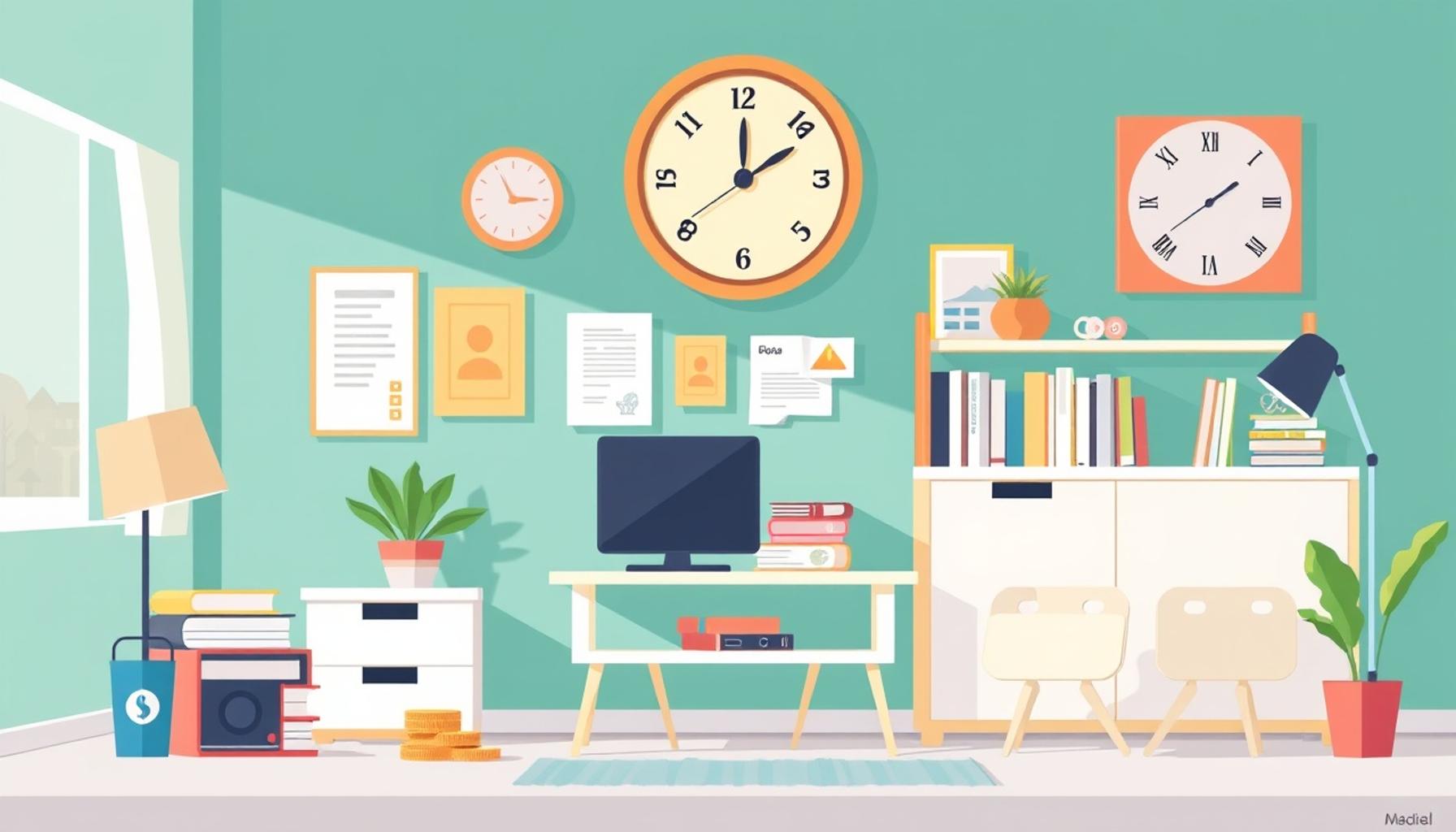
The Impact of Spatial Efficiency on Stress Reduction and Increased Productivity

How Your Workspace Affects Your Mood and Productivity
In today’s fast-paced world, spatial efficiency plays a crucial role in shaping workplace dynamics. The arrangement of our physical environment can significantly influence our mood, stress levels, and overall productivity. An effective workspace goes beyond mere functionality; it has the potential to transform our work experiences in ways that can positively impact our personal and professional lives.
Consider these fundamental aspects of spatial efficiency:
- Layout Design: Open vs. Closed spaces can create very distinct atmospheres. For instance, an open-plan office is often praised for fostering collaboration and communication among team members. However, it can also lead to distractions, stifling creativity for some individuals. A mixed layout, incorporating both open and private spaces, can cater to varied working styles and needs.
- Accessibility: Easy access to resources, such as printers, meeting rooms, and inspirational materials, can significantly reduce frustration and save time. For example, Google thoughtfully designs its campuses with numerous creative spaces and facilities that promote easy accessibility, which can empower employees to work more efficiently.
- Organizational Flow: A well-defined workflow, supported by strategically designed spaces, minimizes chaos and enhances focus. Companies like Toyota utilize a “just-in-time” philosophy to design their assembly lines, showcasing how spatial organization directly impacts productivity and efficiency.
Research indicates a direct correlation between stress reduction and an efficient spatial layout. For instance, a study conducted by the American Journal of Environmental Psychology found that employees in well-organized spaces report lower stress levels and higher job satisfaction. When the workplace atmosphere is harmonious, employees can dedicate more energy to their tasks rather than expending mental resources on navigating cluttered environments.
As companies strive to create optimal work environments, understanding the impact of space is essential. In the office landscape, the way we design our environments can yield profound benefits:
- Improved concentration and focus: Quiet zones or soundproof booths can offer employees respite from noise, enhancing focus.
- Enhanced employee morale: Well-lit spaces with natural elements, such as plants and artworks, have been shown to lift spirits and boost overall morale.
- Stronger collaboration among team members: Thoughtfully designed common areas can encourage impromptu brainstorming sessions and creative exchanges.
Ultimately, embracing spatial efficiency is not just about aesthetics; it’s a vital strategy for boosting productivity while mitigating stress levels. Organizations that invest in creating thoughtfully designed workspaces are likely to see tangible returns through increased employee satisfaction and performance. Join us as we delve deeper into how the interplay of space affects our daily performance in the workplace. Exploring innovative designs and trends can reveal exciting insights and inspire new approaches to enhancing our work environments.
The Importance of Spatial Efficiency in Workplace Design
As organizations look to optimize their environments, spatial efficiency becomes a focal point in the quest for greater well-being and productivity. Understanding how the organization of physical space can contribute to or detract from employee satisfaction is key for employers aiming to create a high-performance culture. Research shows that working in environments that are purposefully designed can profoundly alleviate stress and enhance performance.
One of the primary ways spatial efficiency impacts stress levels is through the concept of personal space. Studies suggest that when employees have control over their immediate environment, including aspects like seating arrangements and workspace customization, they report lower levels of anxiety and stress. According to a report from the Society for Human Resource Management (SHRM), personalized workspaces allow workers to express individuality, which can lead to greater emotional investment in tasks and improved job satisfaction.
Moreover, the integration of nature into workspaces—a principle known as biophilic design—has shown promising results in enhancing employee morale and well-being. Companies that incorporate plants, natural lighting, and outdoor views into their designs experience a notable reduction in stress. A study published in the Journal of Environmental Psychology revealed that workplaces with green elements can reduce employee stress levels by up to 15%. The presence of such elements creates a calming atmosphere, enabling employees to perform optimally without being overwhelmed.
Consider the productivity benefits that arise from incorporating spatial efficiency into workplace environments:
- Flexible Work Areas: Having spaces that can be adapted for various tasks—such as quiet rooms for focused work or collaborative spaces for team brainstorming sessions—allows employees to choose the optimal environment for their current needs.
- Ergonomic Design: A well-planned layout that promotes ergonomics ensures that employees can work comfortably and efficiently. This can prevent physical strain and contribute to a healthier workforce.
- Technology Integration: Efficiently designed spaces that support seamless technology use, such as charging pods and ample outlets, help reduce frustration and enable better workflow.
As companies seek to cultivate productive cultures, the integration of effective spatial design emerges as a critical element. While the aesthetics of a workspace play a significant role in shaping employee attitudes, its function and the way space is utilized can ultimately drive performance. Employers who prioritize spatial efficiency not only invest in their employees’ well-being, but also foster a culture where creativity and productivity can flourish.
Moving forward, understanding the nuances of spatial efficiency will enable organizations to fine-tune their approach to workplace design. The challenge lies in continually evolving these spaces to meet the dynamic needs of their workforce, thus enhancing productivity while ensuring a balanced and less stressful work environment. By embracing this vital aspect of workplace culture, organizations can unlock new levels of employee engagement and satisfaction.
| Advantage | Explanation |
|---|---|
| Enhanced Collaboration | Spatial efficiency promotes open layouts that facilitate teamwork, boosting communication among employees. |
| Reduced Clutter | Efficient use of space minimizes distractions and clutter, allowing for a focused work environment. |
| Improved Mental Health | A well-organized workspace contributes to stress reduction, positively impacting overall employee wellbeing. |
| Increased Productivity | Efficient spatial design results in better workflow, which translates to higher output and productivity. |
As the impact of spatial efficiency increasingly gains attention, organizations are discovering that the layout of their workspaces plays a pivotal role in employee performance. Implementing innovative designs can lead to a more harmonious balance between stress reduction and enhanced productivity. For instance, studies consistently show that environments that prioritize flexibility and comfort significantly contribute to reducing employee stress levels, leading to a more engaged workforce.Exploring further, the integration of greenery and natural light into spatial planning not only enriches aesthetic appeal but also improves concentrations and reduces feelings of anxiety. Organizations looking to optimize their spaces for maximum efficiency should consider these key elements that cater to both psychological comfort and functional efficacy. Investing in spatial efficiency is not merely a matter of aesthetics; it is a strategic decision aimed at cultivating a more productive and healthier workplace.
The Role of Collaborative Spaces in Enhancing Employee Well-being
Collaboration is an essential element of innovation and productivity in modern workplaces. The design of collaborative spaces plays a pivotal role in enabling teamwork and communication, which not only helps mitigate stress but also enhances overall productivity. Open floor plans, communal areas, and team zones are integral components that foster employee interactions and build a sense of community.
A study conducted by Gensler, a leading architecture and design firm, emphasizes that workplaces with ample collaborative spaces see a 20% increase in employee engagement. Such spaces encourage spontaneous conversations and brainstorming sessions, which can lead to creative solutions and drive a sense of connectivity among team members. When employees feel that they can easily communicate with their peers, it diminishes feelings of isolation and pressure that often accompany traditional cubicle environments.
- Activity-Based Workspaces: These spaces allow employees to choose where they work based on the task at hand, whether it’s a quiet nook for focused work or a lively area for group discussions. Research indicates that activity-based working can boost productivity by over 30%, alleviating stress as employees feel empowered to select environments conducive to their work rhythms.
- Meeting Pods and Huddle Rooms: Small, acoustically-treated spaces designed for quick meetings provide an alternative to large conference rooms, ensuring that interruptions to deep work are minimized. By utilizing these efficient meeting spaces, organizations can promote a culture of respect for employees’ time, thereby reducing stress and enhancing morale.
- Flexible Layouts: The ability to reconfigure furniture and layouts as needed empowers workers to adapt spaces for specific projects or team dynamics. This adaptability not only supports productivity but also instills a sense of ownership and agency that can lead to lower stress levels.
Furthermore, the integration of elements from the concept of neuroscience into workplace design presents exciting implications for spatial efficiency. The human brain functions optimally in environments that balance stimulation and calm. Research from Harvard University indicates that cognitive performance can improve by as much as 10% in strategically designed workspaces that include elements like soft colors, rounded designs, and appropriate lighting. These considerations are essential for reducing visual stressors and creating an atmosphere conducive to focused tasks.
As the lines between work and personal life continue to blur, organizations in the United States must recognize the importance of creating spaces that foster well-rounded well-being. Incorporating mixed-use lounge areas, wellness rooms, and even sensory corners within the workspace can profoundly impact stress reduction. This allows employees to engage in mindfulness practices or simply take breaks to recharge, thus enhancing overall focus and productivity when they return to their tasks.
Moreover, emerging trends like the rise of remote work and the development of hybrid workplaces necessitate a rethinking of spatial efficiency. Companies are now challenged to create flexible environments that account for both physical and virtual interactions. This hybrid approach involves designing spaces that can seamlessly accommodate in-person collaboration while also facilitating remote contributions through the use of advanced technology and virtual tools.
Ultimately, acknowledging the impact of spatial efficiency in workplace design is crucial for organizations intent on fostering an engaged, motivated workforce. The careful consideration of collaborative areas, balanced environments, and adaptable layouts will not only promote productivity but also play a significant role in reducing stress levels among employees. As new research continues to emerge, employers will benefit from staying ahead of the curve in cultivating efficient and thriving workplaces.
Conclusion
In an era where employee well-being and productivity are closely intertwined, the role of spatial efficiency in the workplace cannot be overstated. As organizations shift toward more flexible and innovative designs, the benefits of well-planned spaces become increasingly evident. By prioritizing collaborative environments, integrating elements of neuroscience, and ensuring that layouts are adaptable, companies can foster a culture that not only reduces stress but also enhances overall productivity.
The evidence is compelling: workplaces that embrace spatial efficiency report significant boosts in employee engagement and satisfaction. With the right design, employees are empowered to select their working environments based on their tasks, leading to increased autonomy and reduced pressure. By creating designated areas for collaboration as well as quiet, focused work, organizations meet the diverse needs of their workforce, paving the way for innovation and creativity.
As the dynamics of work continue to evolve, particularly with the rise of remote work and hybrid models, the importance of creating efficient and welcoming spaces will only grow. Companies that invest in understanding and implementing effective spatial strategies will not only enhance the well-being of their employees but also drive long-term business success. As we look ahead, it is clear that spatial efficiency is a crucial ingredient in shaping a resilient, productive, and thriving workplace.
Related posts:
Minimalist Workspaces: Creating Functional Environments in Compact Locations
Maximizing Small Spaces: Minimalist Organization Tips for Urban Apartments
Vertical Storage Strategies: How to Make the Most of Every Inch of Space
Multifunctional Furniture: Creative Solutions for a Minimalist and Organized Life
The Psychology of Minimalism: How Spatial Efficiency Enhances Personal Well-Being
Uncomplicating Life: The Relationship between Minimalism, Spatial Efficiency, and Sustainability

Linda Carter is a writer and organization expert specializing in minimalism and personal organization. With extensive experience helping individuals create clutter-free, functional spaces and adopt mindful habits, Linda shares her knowledge on our platform. Her goal is to empower readers with practical advice and strategies to simplify their lives, stay organized, and achieve a sense of calm and balance in their daily routines.